








Water is something we use so often that it almost becomes invisible. We fill the kettle, rinse vegetables, make coffee, wash dishes, and grab a glass from the tap without giving the water much thought.
Then something changes.
Maybe the water has a strange taste. Perhaps there’s a faint odor, cloudy appearance, or sediment collecting in a glass. Or you’ve simply started wondering whether your household water could be cleaner and more pleasant to drink.
That’s when home water treatment becomes worth understanding. There are plenty of systems available, but choosing one shouldn’t be about buying the most complicated equipment. It should begin with a simple question: what exactly are you trying to improve?
Start With Your Water, Not the Product
The first mistake many homeowners make is shopping before testing.
Water quality can vary significantly depending on the source. Municipal water is treated before distribution, while well water can reflect local geology, rainfall, agricultural activity, and other environmental conditions. Household plumbing can also influence what finally comes out of the faucet.
Some issues are easy to notice. Hard water may leave white scale on fixtures. Iron can cause staining. Chlorine can affect taste and odor.
Other substances aren’t visible at all.
That’s why a water test can be useful. It gives you a clearer picture of what is present and whether treatment is actually necessary.
Once you know the problem, comparing technologies becomes much less confusing.
What Water Filtration Actually Does
The term water filtration covers a surprisingly wide range of technologies.
A basic sediment filter can capture particles such as dirt, sand, and rust. Activated carbon filters are commonly used to improve taste and reduce chlorine and certain organic compounds.
Other filters use specialized media designed for specific contaminants.
The important thing is that no filter removes everything. A product advertised as excellent for chlorine isn’t automatically designed to reduce nitrates, bacteria, arsenic, or every other substance that might occur in water.
Always check what a system is certified or specifically designed to reduce.
It sounds obvious, but this simple step can prevent a lot of wasted money.
Understanding Reverse Osmosis
One of the more familiar treatment technologies is reverse osmosis.
RO uses pressure to push water through a semipermeable membrane. Many dissolved substances are separated from the treated water during this process.
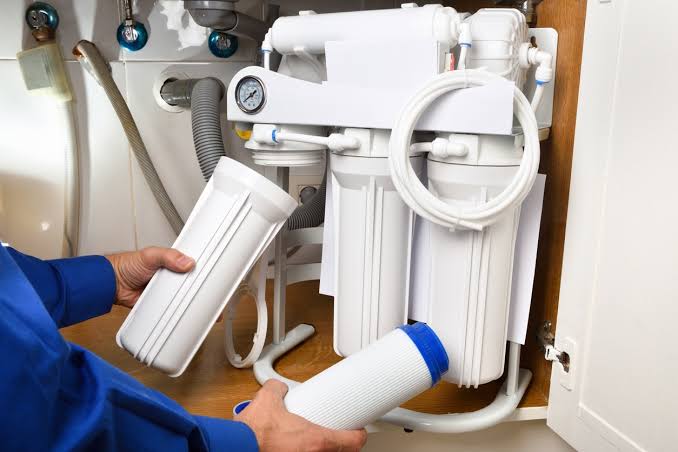
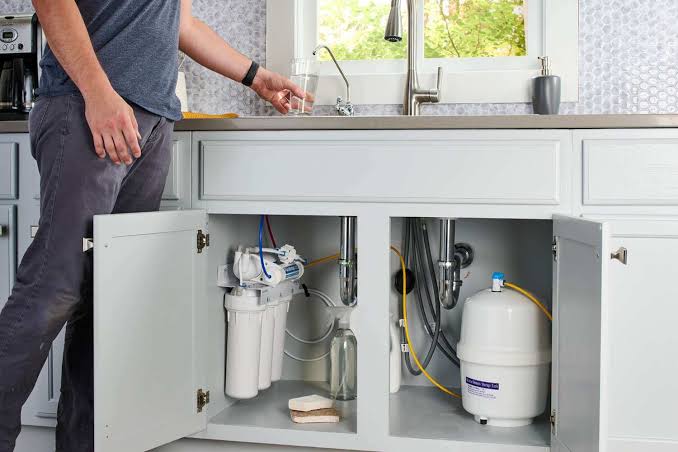
Because RO can provide highly treated water at a specific location, these systems are often installed under the kitchen sink. That’s useful for households that mainly want improved water for drinking and cooking rather than treating every gallon used throughout the property.
There are trade-offs, though.
RO systems generally require multiple filters and periodic membrane replacement. They can also produce wastewater as part of the treatment process.
That doesn’t make RO a poor choice. It simply means you should understand how the system works before installing it.
Why Drinking Water Needs Its Own Approach
The water you use for showering doesn’t necessarily need the same treatment as the water you drink.
You might want whole-home filtration to address chlorine or sediment, while also using a point-of-use RO system for drinking and cooking. In another home, a simple carbon filter may be enough.
The right setup depends on your water quality and priorities.
A quality drinking water system should be convenient enough that your family actually uses it. If getting a glass of filtered water involves several awkward steps, people eventually stop bothering.
Convenience isn’t a luxury here. It’s part of good design.
Don’t Ignore Taste and Odor
Taste is often what gets homeowners interested in filtration in the first place.
Water may technically meet applicable standards and still taste unpleasant. Chlorine is a common reason, although minerals, sulfur compounds, and other factors can influence flavor and smell.
Carbon filtration is frequently used for improving taste and reducing chlorine.
But don’t use taste as your only measure of safety. Some contaminants have no noticeable taste or odor. Water that tastes perfectly normal can still require treatment, while unpleasant-tasting water isn’t automatically dangerous.
If you’re concerned about a particular contaminant, testing is much more useful than relying on your senses.
Think About Where Treatment Is Needed
Do you need treated water at every faucet?
Not necessarily.
Whole-house systems treat water entering the home, making them useful when the concern affects multiple fixtures. This can be particularly helpful for sediment, chlorine, or certain water-quality issues that you notice throughout the house.
Point-of-use systems focus treatment at one location, usually the kitchen sink.
If your main priority is drinking and cooking water, point-of-use treatment can be a practical and potentially more economical approach.
On the other hand, if shower water smells strongly of chlorine or sediment is affecting several appliances, whole-house treatment may make more sense.
Maintenance Is Part of the System
Buying a treatment unit is only the beginning.
Filters need replacing. RO membranes eventually need attention. Housings may need cleaning, and connections should be checked periodically.
A neglected filter can become less effective and restrict water flow. An RO system with overdue filters may produce slower flow or noticeable changes in taste.
Before purchasing, find out exactly what maintenance is required.
Ask how often cartridges should be replaced, what replacement parts cost, and whether the work can be handled at home or requires professional service.
The cheapest system upfront isn’t always the cheapest system to own.
Don’t Buy More Than You Need
Water treatment marketing can make it sound as if every household needs a ten-stage filtration system with a long list of features.
That’s not necessarily true.
More treatment stages don’t automatically mean better water. If your only concern is chlorine taste, a properly selected carbon filter may be enough. If hardness is the issue, a softener may be more appropriate. If testing identifies dissolved contaminants, RO or another specialized technology might be worth considering.
The goal is to match the solution to the problem.
Better Water Starts With Better Information
Choosing a home water treatment system doesn’t need to feel like a guessing game.
Start by understanding your water source. Test when appropriate. Identify the specific concerns you’re trying to address, then compare systems based on performance, maintenance, installation, and long-term cost.
Think about how your household actually uses water, too. The best system isn’t the one with the longest feature list. It’s the one that quietly does what you need, fits your routine, and remains practical to maintain.
Clean, pleasant drinking water shouldn’t require endless research or complicated equipment.
A thoughtful approach is usually enough: know your water, understand the technology, and choose only what your home genuinely needs. The result is simpler, smarter, and much easier to live with.