

Water plays a role in almost every part of daily life. We drink it, cook with it, wash clothes in it, shower with it, and use it to keep our homes clean. So, when something seems wrong with the water supply, the inconvenience can quickly become frustrating. A strange smell from the kitchen tap, cloudy water in a glass, or marks appearing on bathroom fixtures may seem like minor issues, but they often point to underlying water-quality concerns.
The good news is that many household water issues can be identified and managed with the right information. Understanding the source of the problem is the first step. From there, water testing and an appropriate treatment solution can help restore water quality and protect plumbing, appliances, and everyday comfort.
Recognizing Common Water Problems
Some common water problems are easy to notice, while others develop quietly over time. Taste and odor changes are among the most frequently reported concerns. Water may smell like chlorine, sulfur, or rotten eggs, depending on its source and the substances present.
Cloudiness can also raise questions. Sometimes, cloudy water is caused by tiny air bubbles that disappear after the water sits for a short period. In other cases, it may be linked to sediment, minerals, or plumbing issues. Discoloration, unusual particles, or a sudden change in water appearance should not be ignored, especially if the problem continues.
Low water pressure is another concern. It may result from clogged filters, mineral buildup, damaged pipes, or a problem with the municipal supply. If the pressure changes suddenly, it’s worth checking whether the issue affects the whole property or only one fixture.
What Causes Hard Water?
One of the most widespread water-quality concerns is hard water. It occurs when water contains elevated levels of naturally occurring minerals, particularly calcium and magnesium. These minerals are not usually considered dangerous at typical levels, but they can create several practical problems around the home.
Hard water often leaves a chalky residue on faucets, shower doors, sinks, and tiles. Soap may not lather as easily, and laundry can feel stiff or look dull after washing. Over time, mineral deposits may accumulate inside water heaters, dishwashers, washing machines, and plumbing lines.
Many homeowners notice hard water because of scale buildup around the showerhead or a white ring inside a kettle. Others may notice that their skin feels dry after bathing or that shampoo seems difficult to rinse away. These experiences can vary, but they are common reasons people investigate their water hardness.
A water test can determine the actual mineral level instead of relying only on visible signs. Once the hardness level is known, a water professional can recommend whether a softener or another conditioning method is appropriate.
Dealing With Iron and Rust Stains
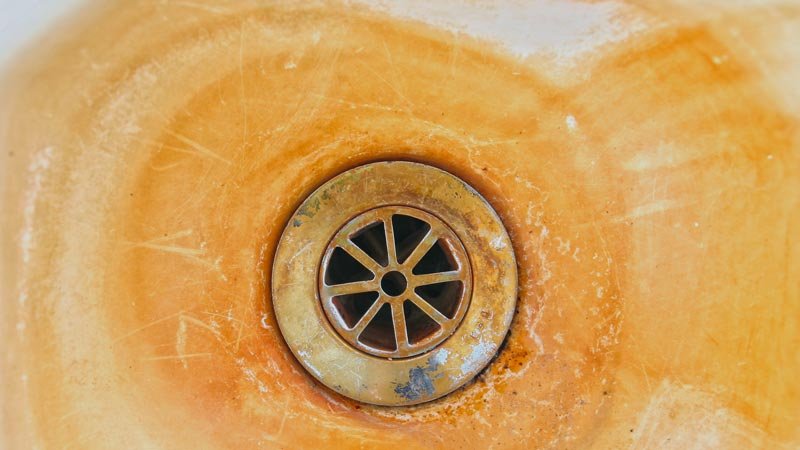
Reddish-orange marks around sinks, toilets, bathtubs, and laundry areas are often associated with iron & rust stains. These stains can be especially common in homes supplied by private wells, although iron-related discoloration may also appear in other water systems.
Iron can enter water naturally as it moves through soil and rock. In some cases, it remains dissolved and causes water to appear clear at first, then develop a rusty color after exposure to air. In other situations, iron particles may already be visible when the water comes from the tap.
The problem is more than cosmetic. Iron can stain light-colored clothing, clog certain components, affect taste, and create an environment where deposits accumulate inside plumbing. Standard water softeners may help with some forms of iron, but they are not designed to address every iron condition.
Treatment depends on the type and concentration of iron present. Options may include specialized iron filters, oxidation systems, sediment filtration, or other treatment methods. Testing is important because the wrong equipment may reduce the problem only temporarily.
Unpleasant Taste and Odor
Taste and odor issues can make otherwise usable water difficult to enjoy. Chlorine, for example, is commonly used to disinfect public water supplies, but some people dislike its smell or flavor. Activated carbon filtration is often used to reduce chlorine taste and odor.
A rotten-egg smell may be linked to hydrogen sulfide, which can occur in groundwater or plumbing systems. This type of odor may require a more specific treatment approach, especially when it is persistent or accompanied by other water-quality changes.
Organic matter, stagnant plumbing, and certain minerals can also affect taste. If the smell appears suddenly, it is sensible to investigate rather than immediately assuming the cause. A water test can help distinguish between a harmless aesthetic concern and a problem that requires further attention.
Sediment and Cloudy Water
Sediment may include sand, silt, clay, or other small particles entering the water supply. It can be more noticeable after plumbing repairs, heavy rainfall, well-pump activity, or changes in water pressure.
While a small amount of sediment may not always indicate a serious problem, it can damage fixtures and reduce the lifespan of water-using appliances. Sediment can also clog faucet aerators and water filters, leading to lower flow.
A sediment filter is often used as an initial treatment step. These filters capture particles before water moves into other treatment equipment. However, they must be selected according to the size and amount of sediment present. A filter that is too small may clog quickly, while one that is poorly matched to the system may not provide sufficient protection.
Why Water Testing Should Come First
It’s tempting to purchase a treatment product based on a symptom alone. A person sees scale and buys a softener, or notices orange stains and chooses a general filter. Sometimes that works, but guessing can lead to unnecessary expense.
Water testing provides a clearer picture of what is actually present. Depending on the situation, testing may examine hardness, iron, manganese, pH, chlorine, total dissolved solids, bacteria, nitrates, or other contaminants.
For private well owners, testing is especially important because groundwater quality can vary by location and season. Municipal water users may also benefit from testing when they notice changes inside the home or want to understand how their plumbing affects water quality.
The results should be interpreted carefully. Not every detected substance requires the same treatment, and a system should be selected according to the water chemistry, household usage, and intended purpose.
Protecting Plumbing and Appliances
Water-quality issues can affect more than drinking and bathing. Mineral deposits may reduce the efficiency of water heaters and increase energy use. Sediment can interfere with valves and cartridges. Iron deposits may discolor fixtures and create maintenance challenges.
Protecting appliances often starts with whole-house treatment or point-of-use filtration, depending on the problem. A water softener may help reduce scale-forming minerals, while a sediment or carbon filter may address particles and taste concerns. Reverse osmosis may be suitable for specific drinking-water needs when properly selected and maintained.
No single system solves every water issue. The most effective setup is usually the one based on actual test results rather than marketing claims.
A Better Approach to Water Quality
Water problems can be frustrating, but they don’t have to become permanent household headaches. The important thing is to pay attention to changes, identify the likely cause, and avoid treating symptoms without understanding the source.
Regular inspections, timely filter replacement, and professional advice can help keep water treatment equipment working properly. If stains return quickly, odors persist, or water quality changes without explanation, further testing may be necessary.
Clean, dependable water supports comfort, protects household equipment, and makes everyday tasks easier. With a thoughtful approach and the right treatment solution, many water-quality concerns can be managed effectively—without guesswork, unnecessary spending, or constant frustration.